
Aarti at Brahma Sarovar
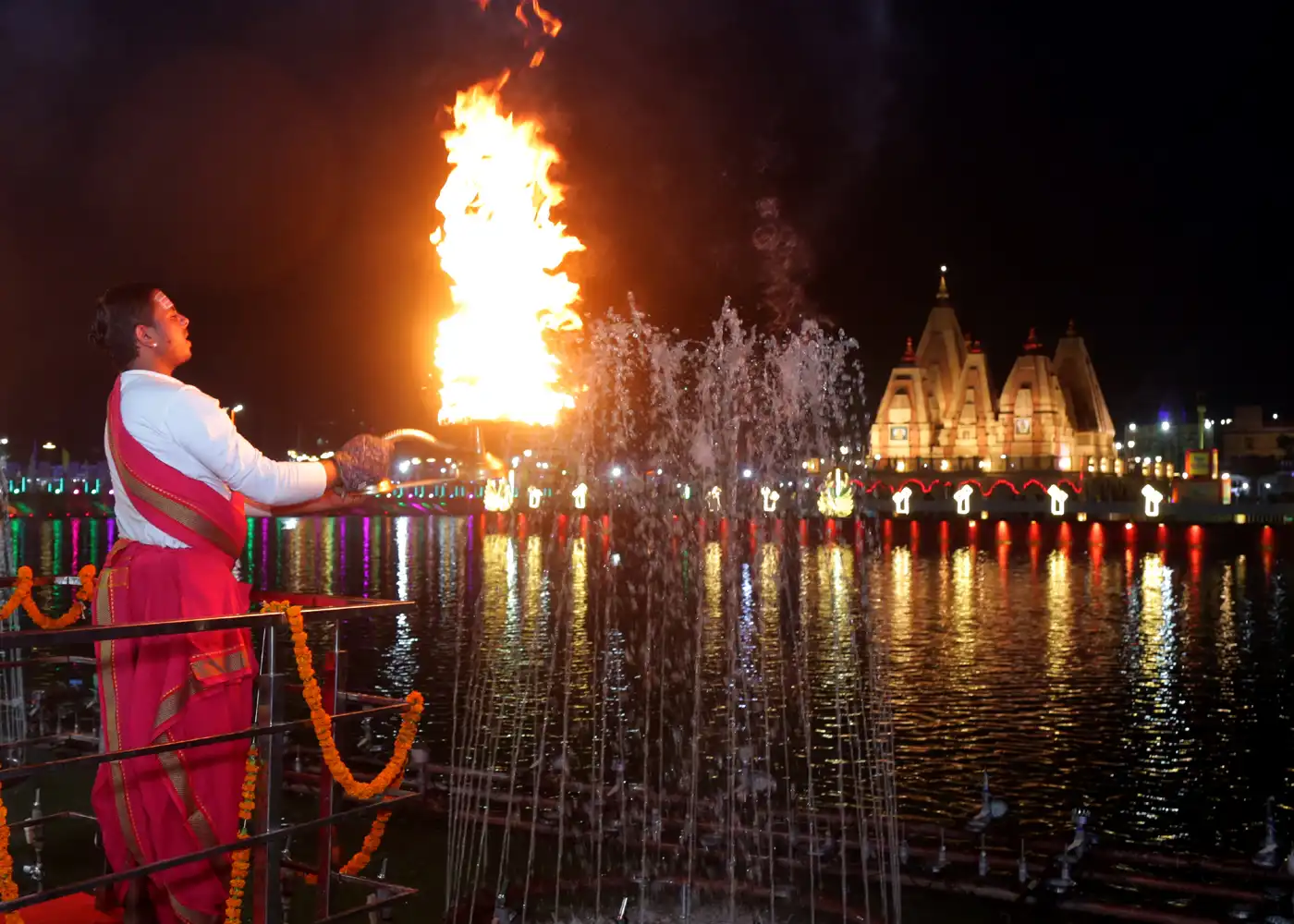
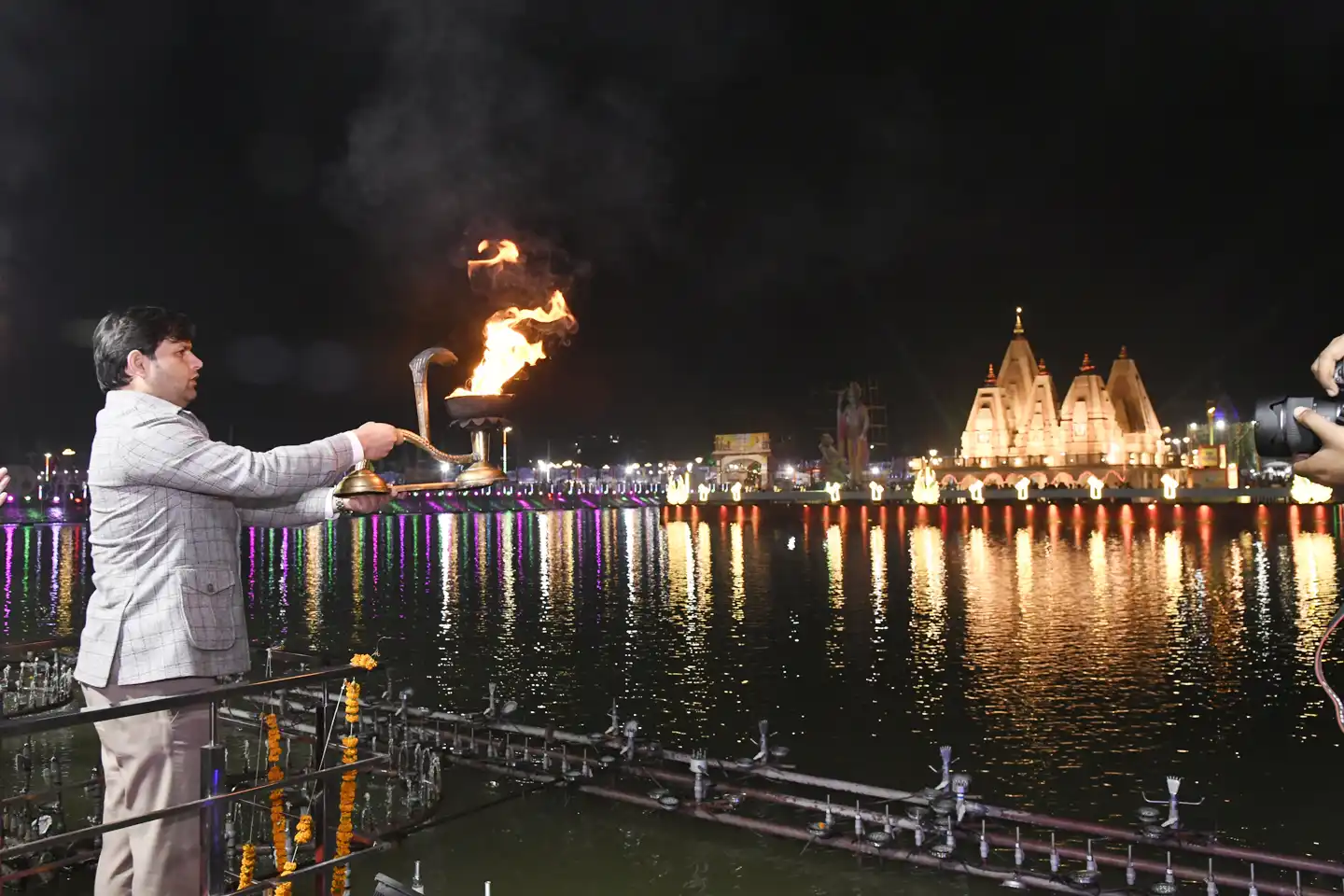
The Aarti (Maha-Aarti) performed at the Brahma Sarovar is a profoundly spiritual and visually stunning daily ritual, considered a highlight of visiting Kurukshetra. It is comparable to the famous Ganga Aarti rituals held at places like Haridwar and aranasi.
Here are the details about the Aarti at Brahma Sarovar:
The Brahma Sarovar Maha-Aarti
1. Timing and Location:
Daily Event: The Aarti is performed every evening.
Time: The timing is adjusted seasonally to coincide with sunset. Generally, it takes place around 6:00 PM to 7:30 PM. It is best to confirm the exact time locally on the day of your visit.
Venue (Purushotam Pura Bhag): The main ceremony is held on the western bank (Purushotam Pura Bhag), which is the most developed and grand area of the Sarovar, providing the best vantage point for the ceremony.
2. The Ritual (Deep Daan and Aarti):
The Prayer: The ceremony involves singing devotional songs and chanting Vedic mantras by a group of priests (Pandits).
Deep Daan (Floating Lamps): This is the most iconic part of the ritual. Devotees light small earthen lamps (diyas) containing a wick and oil, and then float them on the sacred waters of the Sarovar. The sight of thousands of tiny lights drifting across the vast tank as dusk sets in is mesmerizing and is referred to as “Deep Daan” (offering of lamps).
The Lamps: The priests use large, multi-tiered lamps (aarti stands) to wave in circular motions, offering light and devotion to the presiding deity, Lord Shiva, whose temple (Sarveshwar Mahadev) is on the island in the center of the Sarovar.
3. Special Occasions:
Gita Jayanti: The Aarti reaches its peak of grandeur during the annual International Gita Mahotsav, which celebrates the birth of the Bhagavad Gita, usually held in late November or early December. During this time, the entire Sarovar is illuminated, and the scale of the Deep Daan ceremony is massive, drawing hundreds of thousands of pilgrims.
Solar Eclipse: On the rare occasion of a solar eclipse visible from Kurukshetra, the Sarovar becomes intensely crowded. The rituals performed during this time are considered exceptionally meritorious, making the subsequent Aarti one of the most powerful and heavily attended.
नववर्ष प्रतिपदा